
Small business owner desk with insurance policy documents, laptop, and coffee cup, office team visible in background
What Is Group Health Insurance and How Does It Work

Content
Group health insurance represents one of the most common ways Americans receive medical coverage. Employers purchase these plans to cover multiple employees under a single policy, typically negotiating better rates than individuals could secure on their own. Unlike individual health insurance that you buy directly from an insurer or through the marketplace, group plans spread risk across many people, which usually translates to lower premiums and better benefits.
Most working Americans with health coverage get it through an employer-sponsored group plan. The employer acts as the policyholder, negotiating with insurance carriers and handling administrative tasks. Employees become certificate holders under that master policy. This arrangement creates economies of scale—insurers can process one contract covering dozens or hundreds of people rather than managing separate policies for each person.
The mechanics are straightforward: an employer selects a plan, pays part or all of the premium, and employees who meet eligibility criteria can enroll. The insurance company pools the medical risk across all covered members, which means a 25-year-old marathon runner and a 55-year-old with diabetes pay the same employee contribution rate. This community rating within the group prevents cherry-picking and makes coverage accessible to people who might face high premiums or denials in the individual market.
Understanding Group Health Insurance Basics
What is a group health insurance plan at its core? It's a contract between an employer (or organization) and an insurance carrier to provide health benefits to eligible members. The employer owns the policy and determines which employees qualify, though federal and state laws set minimum standards.
Group plans differ fundamentally from individual coverage in several ways. First, underwriting works differently—insurers evaluate the group's overall health profile rather than scrutinizing each applicant's medical history. Someone with a pre-existing condition faces no higher premiums or coverage denials when joining a group plan, whereas individual market protections vary by circumstance despite ACA reforms.

Author: Derek Whitmore;
Source: blaverry.com
Second, cost sharing tilts favorably toward employees. Employers typically cover 70-85% of the premium for employee-only coverage, leaving workers to pay the remainder through payroll deductions. Family coverage follows a similar pattern, though employer contributions for dependents often run lower. In the individual market, you shoulder the entire premium unless you qualify for subsidies.
Third, tax treatment provides significant advantages. Employer premium contributions are tax-deductible business expenses and aren't counted as taxable income to employees. Employee premium contributions usually come from pre-tax dollars through Section 125 cafeteria plans, reducing taxable income. Individual market premiums offer no such automatic tax break unless you itemize deductions and meet specific thresholds.
Group health insurance also carries guaranteed issue rights—eligible employees can't be turned away during open enrollment or when newly hired, regardless of health status. This contrasts with the individual market's limited enrollment periods tied to the marketplace calendar.
Who Qualifies for Group Health Insurance
Eligibility rules vary by employer and plan design, but common frameworks exist. Most employers require employees to work a minimum number of hours weekly—often 30 hours under ACA definitions of full-time employment. Some companies extend coverage to part-time workers at 20 or 25 hours, though this remains voluntary for small employers.
New hires typically face a waiting period before coverage begins. Federal law caps this at 90 days, though many employers offer immediate coverage or 30-60 day waits. During this gap, employees remain uninsured or must arrange temporary coverage. The waiting period starts from the hire date, not from when the employee completes paperwork.
Participation requirements affect whether an employer can even offer a group plan. Insurers typically require that 70% of eligible employees enroll, though this drops to 50% or lower in some states for small groups. Employees who waive coverage because they have spouse or parent coverage still count toward participation rates, but those who simply decline usually don't. This prevents adverse selection—if only sick employees enrolled, premiums would skyrocket.
Dependent coverage extends to spouses and children, with definitions set by plan documents. The ACA requires plans to cover children up to age 26 regardless of student status, marital status, or financial dependency. Domestic partners may qualify if the plan document allows, though tax treatment differs from spousal coverage.
Class-based eligibility lets employers define different coverage tiers. A company might offer coverage to all full-time employees but exclude seasonal workers, or provide richer benefits to executives than to hourly staff. These distinctions must follow non-discrimination rules to avoid favoring highly compensated employees in ways that trigger tax penalties.

Author: Derek Whitmore;
Source: blaverry.com
Group Health Insurance Coverage Options
Group plans come in familiar formats that mirror individual market structures. Health Maintenance Organizations (HMOs) require members to select a primary care physician who coordinates care and provides referrals to specialists. HMOs typically offer the lowest premiums but the least flexibility—out-of-network care usually isn't covered except in emergencies.
Preferred Provider Organizations (PPOs) allow members to see any provider without referrals, though staying in-network costs less through negotiated rates. Out-of-network care is covered but at higher cost-sharing levels. PPOs charge higher premiums than HMOs but appeal to employees who want choice and flexibility.
High Deductible Health Plans (HDHPs) pair low premiums with high deductibles—$1,650 for individuals or $3,300 for families in 2026 at minimum. These plans qualify for Health Savings Accounts (HSAs), which let employees contribute pre-tax dollars to pay medical expenses. Unused HSA funds roll over year to year and earn interest, creating a tax-advantaged medical savings vehicle. HDHPs work well for healthy employees who want to minimize premium costs and build savings.
Point of Service (POS) plans blend HMO and PPO features, requiring primary care physician selection like an HMO but allowing out-of-network care like a PPO, usually with referrals.
Coverage typically includes hospitalization, physician services, emergency care, prescription drugs, preventive care, mental health services, and maternity care. The ACA's essential health benefits mandate ensures small group plans cover these core categories. Preventive services like annual checkups, immunizations, and cancer screenings carry no cost-sharing—no copays or deductibles apply.
Prescription drug coverage operates through tiered formularies. Generic drugs occupy tier one with lowest copays, preferred brand-name drugs sit in tier two, non-preferred brands in tier three, and specialty medications in tier four with the highest cost-sharing. Some plans use coinsurance (a percentage of drug cost) rather than flat copays for higher tiers.
Mental health and substance abuse services must be covered at parity with physical health services—insurers can't impose stricter limits on therapy visits than on other outpatient care.

Author: Derek Whitmore;
Source: blaverry.com
Small Business Group Health Insurance Requirements
Federal requirements hinge on employer size. The ACA's employer mandate applies to companies with 50 or more full-time equivalent employees, requiring them to offer affordable, minimum-value coverage or face penalties. Small businesses under 50 employees face no mandate—offering coverage remains optional.
"Affordable" means employee-only premium contributions don't exceed 9.02% of household income in 2026 (this percentage adjusts annually). "Minimum value" means the plan pays at least 60% of covered expenses for a standard population. Plans failing these tests may trigger penalties if employees receive marketplace subsidies.
Small group market definitions vary by state but generally include employers with 2-50 employees. Some states expand this to 100 employees. Within the small group market, insurers must accept all applicants during open enrollment, can't vary rates based on health status, and must offer coverage year-round.
State continuation laws may require employers to offer continued coverage when employees leave. Federal COBRA applies to employers with 20+ employees, requiring 18 months of continued coverage at the employee's expense (up to 102% of premium). Smaller employers may face state "mini-COBRA" laws with similar requirements.
Minimum employee counts for establishing a group plan typically start at two employees in most states. Both must be W-2 employees, not contractors. Some insurers require the business owner and one other employee, while others allow two employees excluding the owner. Sole proprietors without employees generally can't access group coverage, though some states allow groups of one.
Compliance extends to reporting and disclosure. Employers must provide Summary of Benefits and Coverage documents explaining plan terms in plain language, distribute Summary Plan Descriptions outlining ERISA rights, and file Form 5500 annually for self-funded plans or plans with 100+ participants.
How Much Does Group Health Insurance Cost
Premium costs vary widely based on location, industry, employee demographics, and plan design. Geography matters enormously—coverage in New York or California costs substantially more than in Iowa or Utah due to medical cost variations, state mandates, and market competition.
Employee age drives costs more than any other factor. A group with average age 50 pays roughly double what a group averaging age 30 pays. Family status matters too—employees adding spouses and children trigger higher premiums than employee-only coverage.
Industry affects rates through claims experience and risk profiles. Construction companies face higher premiums than accounting firms due to injury risk. Restaurants and retail businesses with high turnover see rate pressure from administrative costs and adverse selection as transient workers may enroll only when needing care.
Plan design creates the most controllable cost variable. Higher deductibles and out-of-pocket maximums lower premiums. Narrower networks cost less than broad networks. Higher copays and coinsurance reduce premium expense. Employers balance premium savings against employee satisfaction and recruitment considerations.
Premium sharing arrangements vary. Most employers pay 70-85% of employee-only premiums, with employees covering the rest. Family coverage splits less generously—employers might pay 50-60% while employees cover 40-50%. Some employers pay 100% of employee premiums but nothing toward dependents. Others contribute flat dollar amounts regardless of coverage tier.
Small businesses often underestimate the total cost of group health insurance, focusing only on premiums. When you factor in administrative time, compliance requirements, and the need for benefits expertise, the true cost runs 15-20% higher than the premium alone. However, the recruiting and retention advantages usually justify the investment, especially in competitive labor markets
— Jennifer Martinez
Cost Breakdown for Small Businesses
Businesses with 2-10 employees typically pay $450-$650 per employee monthly for employee-only coverage, depending on location and plan type. The employer might contribute $350-$500 of this, leaving employees with $100-$150 monthly deductions.
Companies with 11-25 employees see slight economies of scale, paying $425-$625 per employee monthly. Larger small businesses with 26-50 employees might pay $400-$600 monthly per employee.
These figures represent averages—actual costs swing 30-40% higher or lower based on the factors discussed above. A tech startup in San Francisco with young employees might pay $550 monthly for PPO coverage, while a manufacturing company in Alabama with older workers might pay $700 for an HDHP.
| Number of Employees | Average Monthly Premium per Employee | Typical Employer Contribution | Typical Employee Contribution |
| 2-10 | $550 | 75% ($413) | 25% ($137) |
| 11-25 | $525 | 78% ($410) | 22% ($115) |
| 26-50 | $500 | 80% ($400) | 20% ($100) |
| 51-100 | $475 | 82% ($390) | 18% ($85) |
Family coverage roughly triples these amounts, though employer contribution percentages often drop to 50-60% for dependent coverage.
Additional costs include broker commissions (typically 3-6% of premium, paid by the insurer but reflected in rates), COBRA administration if applicable, and benefits administration software or third-party administrator fees for larger groups.
How to Enroll in Group Health Insurance
Enrollment windows follow structured timelines. Open enrollment occurs annually, typically in the fall, when all eligible employees can enroll, change plans, or modify coverage levels regardless of life circumstances. This window usually lasts 2-4 weeks. Employees who don't enroll during open enrollment generally must wait until the next year unless they experience a qualifying life event.
Qualifying life events trigger special enrollment periods allowing mid-year changes. These include marriage, divorce, birth or adoption of a child, loss of other coverage, change in employment status affecting eligibility, or moving to a new coverage area. Employees typically have 30-60 days from the qualifying event to request enrollment changes.
New hire enrollment operates separately. Newly eligible employees can enroll when they satisfy waiting period requirements, regardless of the annual open enrollment calendar. They typically have 30 days from eligibility date to complete enrollment. Missing this deadline means waiting until open enrollment or experiencing a qualifying event.
Author: Derek Whitmore;
Source: blaverry.com
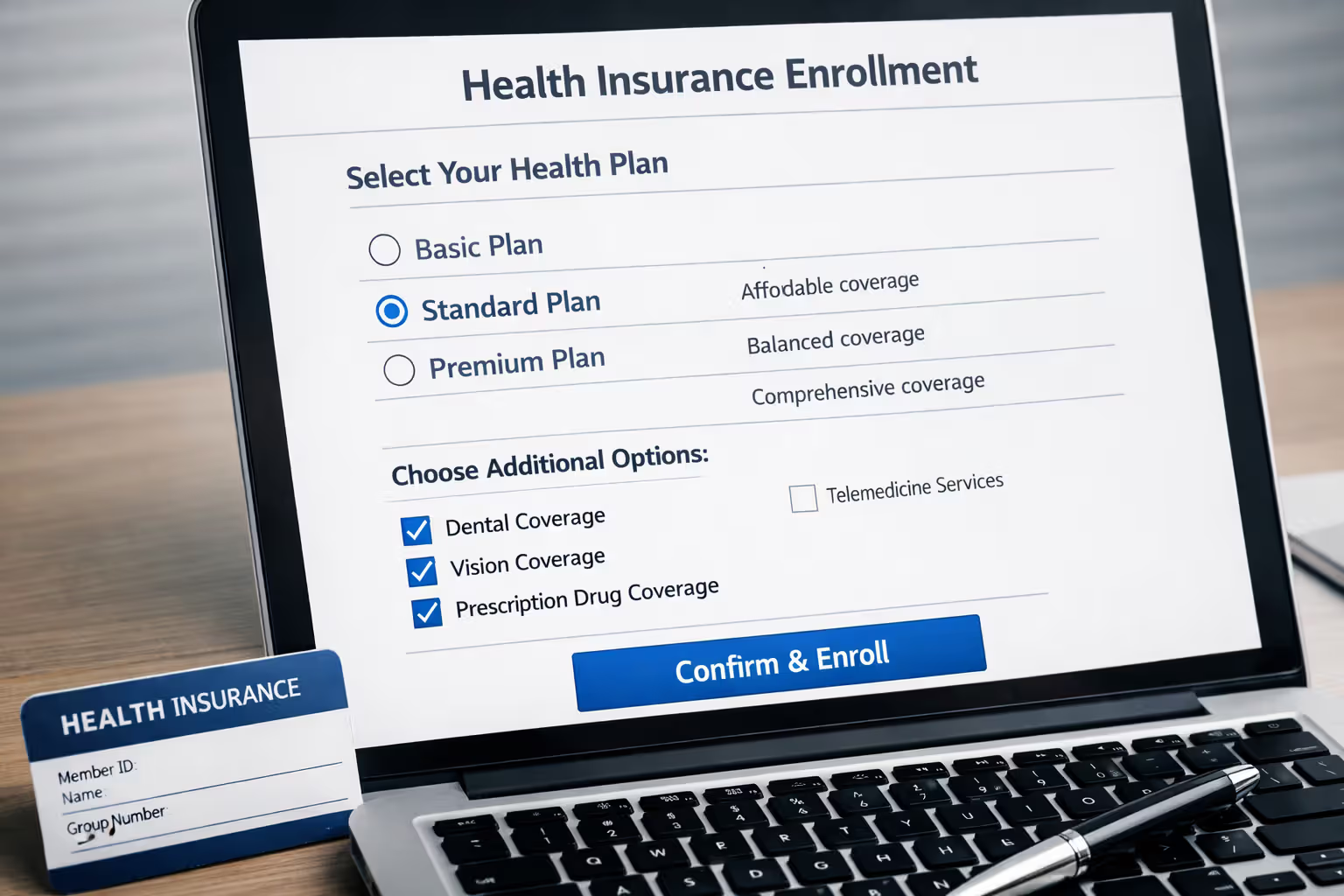
How does group health insurance work from an enrollment mechanics perspective? Employers distribute enrollment materials explaining plan options, costs, and coverage details. Employees complete election forms selecting their plan and coverage tier (employee-only, employee-plus-spouse, employee-plus-children, or family). They designate beneficiaries and authorize payroll deductions.
Employers submit enrollment information to the insurance carrier, which issues identification cards and coverage documents. Coverage typically begins on the first day of the month following enrollment completion, though some plans use the first of the month after the waiting period ends.
Electronic enrollment systems streamline this process. Employees log into benefits portals, review options, compare costs, and make elections online. Decision-support tools estimate out-of-pocket costs based on expected medical usage, helping employees choose appropriate plans.
Deadlines matter significantly. Missing open enrollment means going without coverage for a year unless a qualifying event occurs. Missing the new hire enrollment window creates the same gap. Employees who miss deadlines sometimes attempt to claim qualifying events retroactively, but documentation requirements prevent abuse—marriage certificates, birth certificates, or loss-of-coverage letters must substantiate claims.
Frequently Asked Questions About Group Health Insurance
Group health insurance serves as a cornerstone benefit for businesses competing for talent. The combination of tax advantages, risk pooling, and comprehensive coverage creates value for both employers and employees that individual coverage can't match. Small businesses face no federal requirement to offer coverage but gain significant recruiting and retention advantages when they do.
Costs vary substantially based on controllable and uncontrollable factors. Geographic location and employee demographics drive baseline expenses, while plan design choices and contribution strategies let employers manage costs within their budgets. The smallest businesses pay premium rates due to limited risk pooling, but even groups of two can access coverage in most states.
Understanding eligibility rules, enrollment periods, and compliance requirements prevents costly mistakes. Employers must navigate waiting periods, participation thresholds, and federal and state mandates while communicating effectively with employees about their options and obligations.
The decision to offer group health insurance involves financial analysis and strategic considerations. Premium costs represent only part of the equation—administrative time, compliance complexity, and competitive positioning all factor into the calculation. For most small businesses with stable workforces, the investment delivers returns through improved employee satisfaction, reduced turnover, and enhanced ability to attract skilled workers.
Businesses exploring group coverage should consult with licensed insurance brokers who can compare multiple carriers, explain state-specific requirements, and design plans matching their budget and workforce needs. Brokers typically charge no direct fees to employers since carriers pay their commissions, making professional guidance accessible even for the smallest businesses.