

Person holding a health insurance card over a trash bin with paperwork and calculator on a desk in the background
Can You Cancel Health Insurance at Any Time

Content
Last month, my neighbor tried dropping his health insurance like he'd cancel Spotify. Just call, give notice, done by next week—right?
Wrong. He paid three extra months of premiums he didn't want, nearly lost coverage for a surgery he needed, and spent hours untangling the mess with customer service.
Health insurance doesn't work like your streaming services or gym membership. You can't just decide on a random Tuesday that those $500 monthly premiums are killing your budget and walk away. Most plans lock you in except during specific windows, and insurance companies will keep billing you—legally—whether you're using the coverage or not.
Why the restrictions? Insurance only works when healthy people stay in the pool alongside sick ones. If everyone could bail right after getting treatment and jump back in when they needed care again, the whole system would implode within months.
Where you got your insurance matters more than anything else. Plans from your employer follow completely different cancellation rules than ones you bought on Healthcare.gov. Medicaid operates under yet another set of guidelines. Mix these up and you'll find yourself stuck paying for two policies simultaneously or facing collection notices for a plan you thought you'd already ended.
When You Can Cancel Health Insurance Outside Open Enrollment
Marketplace plans let you make changes during one annual window: November 1 through January 15. That's your guaranteed shot every year.
Need out in April? July? September? You'll need what insurance companies call a qualifying life event—basically, something major happened that gives you temporary permission to adjust coverage mid-year.
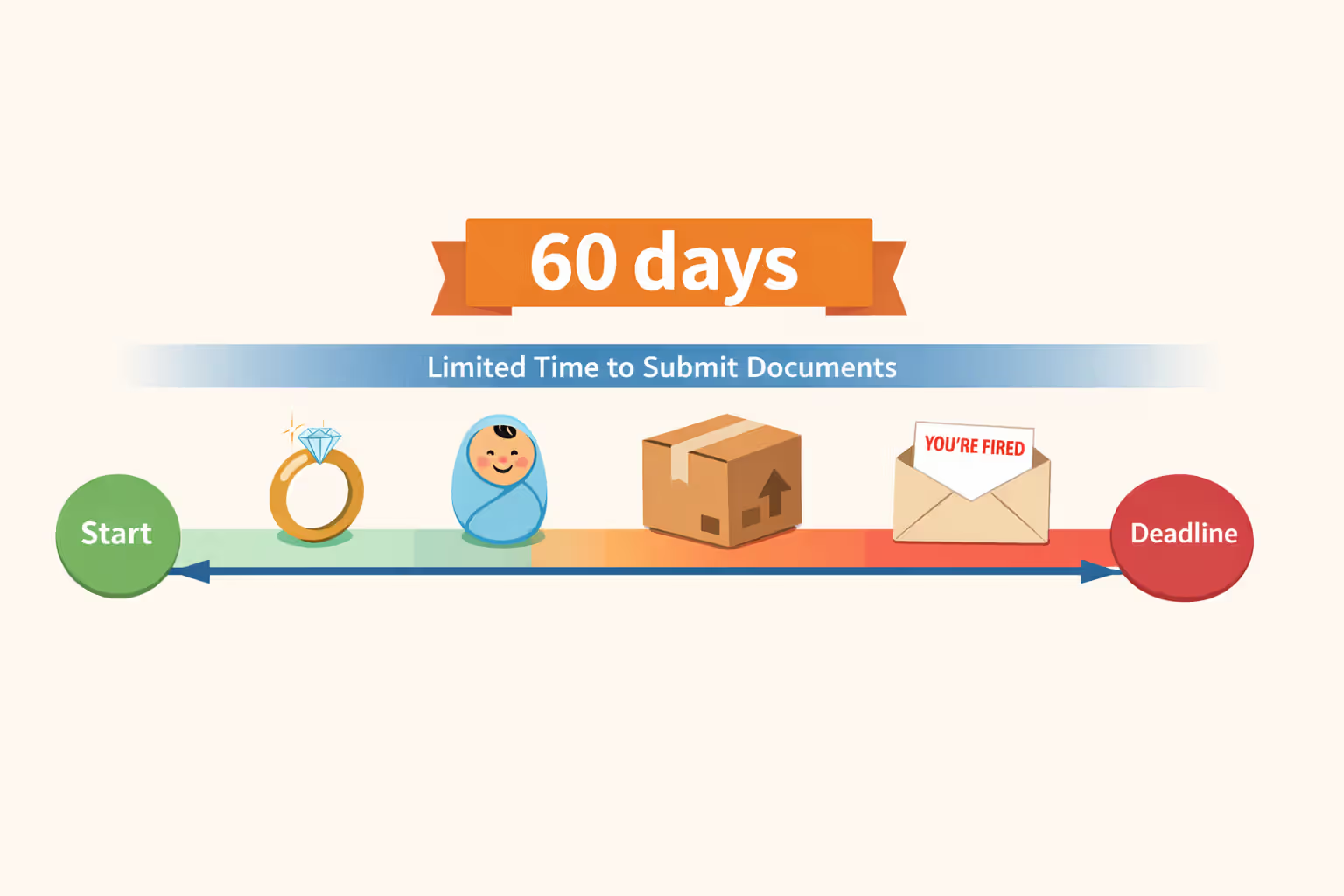
Life changes that unlock special enrollment:
- You lost existing coverage: Your employer eliminated health benefits, you got laid off, or they cut your hours below the threshold for eligibility
- You turned 26 and aged off your parents' plan: Coverage ends the month of your birthday, giving you 60 days to find your own insurance
- You got married or your divorce finalized: Either situation opens a 60-day window—maybe you're joining your spouse's employer plan or splitting off onto individual coverage
- A baby arrived: Birth, adoption, or foster placement each give you 60 days to adjust your insurance for the new dependent
- Your address changed: Moving to a different ZIP code with new plan options qualifies. Switching apartments within your same coverage area doesn't count
- Your income shifted substantially: Major pay changes affecting whether you qualify for Medicaid or how much subsidy you receive
- Your immigration status changed: Gaining citizenship or lawful residence opens enrollment
Author: Melissa Grant;
Source: blaverry.com
Here's where people mess up: special enrollment lasts exactly 60 days from the qualifying event. Submit your paperwork on day 63? You're waiting until November.
Some situations bypass these qualifying event requirements completely. Enrolling in Medicare, Medicaid, or CHIP lets you drop private insurance immediately. Incarceration also ends coverage, though most insurers will bill through the end of that month.
One mistake catches people constantly: A special enrollment period doesn't automatically cancel your existing plan. You have to actively terminate your current coverage while signing up for the new one. Otherwise both companies keep billing you until you notice the double charges and spend weeks fixing it.
How Health Insurance Cancellation Rules Work
Try canceling without understanding these mechanics? That's how you end up with surprise bills showing up four months later.
When coverage actually stops confuses almost everyone. You submit cancellation paperwork on March 15th—your coverage might run through March 31st, April 15th, or April 30th depending on how that specific insurer processes requests. You owe premiums for every single day the policy stays active, whether you visited a doctor or not.
How much notice you need usually ranges from 14 to 30 days, though it varies. Employer plans get messier because HR has to coordinate with the insurance carrier—adding extra processing layers. Don't assume coverage ends the second you request cancellation. Get written confirmation showing the exact end date, or prepare for billing arguments that drag on for months.
Whether you'll see refunds depends on surprisingly rigid rules. Most insurers only prorate returns for documented qualifying events or if you cancel before your coverage period actually started. Cancel halfway through the month without a valid qualifying reason? The carrier keeps the full premium since they provided coverage availability for those days, regardless of whether you filed any claims.
Grace periods create complications around timing. Marketplace plans offering subsidies give you 90 days before terminating for non-payment. During this stretch, you're technically still enrolled, though the insurer will deny claims after day 30. The trap: Just stopping payments isn't the same as properly canceling. You'll get billed for months of "coverage" you thought you'd already dropped.
Real cancellation requires written documentation—phone calls alone won't protect you. Get a confirmation number immediately, then send a follow-up letter by certified mail. Keep these records for at least three years. You'll be grateful for that paper trail when billing disputes pop up later.
Cancellation Policies by Plan Type
Where your insurance comes from determines which rules apply. Get this wrong and expensive problems follow fast.
| Plan Type | Cancel Anytime? | Need Qualifying Event? | Notice Required | Refund Policy |
| Employer plans | No | Yes, outside annual enrollment | 2-4 weeks | Almost never prorated |
| Marketplace/ACA | No | Yes, outside annual enrollment | 14+ days | Sometimes with valid qualifying event |
| Medicaid | Yes | No | Immediate to 10 days | No premiums to refund |
| Medicare | Depends which part | Varies by program | Different for each part | Part B monthly; Advantage varies |
| Private direct purchase | Varies by carrier | Insurer sets policy | Usually 30 days | Rarely for partial months |
Employer-Sponsored Plans
Workplace insurance follows strict enrollment calendars. You make changes during annual open enrollment or within 30 days of a qualifying event happening. Got married three weeks ago? That 30-day clock already started—not when you eventually tell HR about it.
COBRA throws a wrench into employer plan cancellation. Losing your job doesn't automatically end your coverage—you get offers to continue it for 18-36 months at full cost plus a 2% administrative fee. Ignoring COBRA paperwork creates risks. Without explicitly declining in writing, you might face demands for retroactive premiums.
Some employers let you cancel mid-year if you prove you're getting other qualifying coverage. Expect to provide documentation: insurance cards, employer verification letters, similar proof. Without solid evidence, HR will reject requests outside qualifying events or open enrollment.
Marketplace and ACA Plans
Marketplace coverage follows federal rules allowing changes only during open enrollment or special enrollment triggered by qualifying events. Your plan's network type—HMO, PPO, EPO, whatever—makes zero difference for enrollment restrictions.
If you received premium subsidies, cancellation gets trickier. Got advance tax credits and cancel mid-year without a proper qualifying event? The IRS reconciles everything when you file taxes. If your actual income for the year exceeded what you estimated, you'll owe money back—sometimes thousands of dollars.
Canceling Marketplace coverage requires using Healthcare.gov or your state exchange portal. Calling the insurance company directly won't properly end enrollment or stop subsidy payments. Log into your exchange account, follow the cancellation workflow, and screenshot every confirmation page. That documentation protects you when system glitches happen.
Medicaid and Medicare
Medicaid allows voluntary cancellation anytime since it functions as public assistance rather than purchased insurance. But dropping Medicaid without replacement leaves you uninsured and potentially unable to re-enroll until you experience a qualifying event or reach next open enrollment.
Medicare works differently depending which piece you're looking at. Part A (hospital coverage) rarely makes sense to cancel since most people pay nothing for it. Part B (outpatient medical) requires written cancellation submitted to Social Security, which processes it at month's end. Medicare Advantage plans (Part C) follow annual enrollment schedules, though you get one chance to switch back to Original Medicare within your first three months of Advantage enrollment.
Medigap policies sold through private carriers typically allow cancellation anytime with 30 days written notice. The catch? Re-enrolling later might trigger medical underwriting and dramatically higher premiums outside your guaranteed issue window.

Author: Melissa Grant;
Source: blaverry.com
Steps to Cancel Your Health Insurance Policy
Here's your practical roadmap for canceling correctly:
Step 1: Lock down your new coverage start date before you touch existing insurance. Better to overlap coverage by one day than risk any gap at all. Insurers absolutely won't backdate coverage if you get injured or sick during an uninsured period.
Step 2: Dig out your current plan documents and find the cancellation procedures. Look in your policy for sections titled "ending coverage," "termination procedures," or "cancellation process." Note any required notice timeframes or specific forms they mention.
Step 3: Put your cancellation request in writing. Email works, though certified mail with return receipt creates the strongest documentation. Include your policy number, the termination date you're requesting, and a brief explanation for canceling.
Step 4: Gather and submit supporting documentation. Qualifying life events require verification. Marriage? Send the certificate. Baby? Provide birth records. Divorce? Include the decree. New employer coverage? Attach your benefits confirmation. Incomplete documentation delays processing and extends how long you owe premiums.
Step 5: Get written confirmation of cancellation. Demand a formal termination letter that clearly states your final coverage date. This single document proves you didn't have coverage if the IRS questions gaps or if healthcare providers submit bogus bills months later.
Step 6: Pay off any outstanding balances. Insurers routinely send unpaid amounts to collections, tanking your credit score. Even if you're disputing charges, pay them while you resolve the disagreement. Protecting your credit matters more than winning a billing argument.
Step 7: Cut up your insurance cards or return them if they ask (though many insurers don't bother). More importantly, tell your doctors, pharmacies, and other healthcare providers about your coverage change. Prevents billing nightmares down the road.
For employer coverage, work exclusively through HR. Don't contact the insurance carrier directly—your employer controls the enrollment, not the insurance company.
Risks of Canceling Health Insurance Without Replacement Coverage

Author: Melissa Grant;
Source: blaverry.com
Going uninsured plants financial landmines that most people ignore until emergencies hit.
Tax penalties disappeared at the federal level in 2019, but five states still impose their own individual mandates with real teeth. California, Massachusetts, New Jersey, Rhode Island, and Washington D.C. charge penalties ranging from $700 to over $4,000 per year for staying uninsured. These hit when you file state taxes and frequently blindside people.
Gaps in coverage history haunt future insurance applications. The Affordable Care Act prevents denial for pre-existing conditions in the individual market, but short-term plans and certain other products still use medical underwriting. Coverage gaps signal higher risk to insurers, potentially inflating your premiums substantially.
Emergency costs financially destroy people faster than you'd imagine. A basic emergency room visit averages $1,500-$3,000. Ambulance rides cost $400-$2,500. A three-day hospital stay easily exceeds $30,000. Without insurance negotiating, you pay full chargemaster rates—often 200-300% above what insurers actually pay for identical services.
Canceling health insurance basically means you're gambling monthly premium savings against catastrophic financial exposure. That $400 monthly premium stings until you're staring at a $100,000 surgery bill.
Pre-existing conditions become problems if you develop health issues while uninsured then try re-enrolling. ACA plans legally can't deny you coverage, but you'll wait until open enrollment or a qualifying event occurs. During that waiting period—potentially lasting months—you pay full uninsured rates for everything: medications, specialist visits, diagnostic tests, treatments that insurance would have substantially covered.
People focus on monthly premium costs without properly weighing the financial protection health insurance actually delivers. You might be perfectly healthy today, but that guarantees nothing about tomorrow's unexpected diagnosis or accident. The real question isn't whether you can afford insurance premiums—it's whether you can afford being without coverage when something inevitably goes wrong
— Jennifer Tolbert
Common Mistakes When Canceling Health Insurance
Real situations showing what goes wrong:
Missing deadline specifics: Michael submitted his Marketplace cancellation on February 10th, figuring coverage would stop February 28th. His insurer's policy required 14 days notice before a month's last day to end coverage that month. His insurance actually ran through March 31st, sticking him with an unexpected March premium.
Dropping coverage before securing something new: Sarah quit her job and immediately canceled employer coverage, planning to join her husband's workplace insurance. His employer's next enrollment window didn't open for six more weeks. She went uninsured during that gap, broke her wrist playing softball, and paid $8,500 out-of-pocket that insurance would've covered.
Thinking stopped payments equal formal cancellation: James figured stopping automatic premium withdrawals would cancel his insurance. His insurer kept the coverage active, sent escalating bills to collections after 90 days, and torpedoed his credit score by 80 points.
Blowing past COBRA deadlines: Maria left her job and tossed the COBRA paperwork because the premiums seemed outrageous. Three weeks later, doctors diagnosed a serious condition requiring immediate treatment. She tried electing COBRA retroactively but had blown past the 60-day deadline.
Canceling during active treatment: Robert dropped his insurance while undergoing physical therapy for car accident injuries, switching to cheaper coverage. His new insurer classified the accident injuries as pre-existing and refused covering ongoing treatment for six months.
Treating Medicaid like commercial insurance: Linda canceled Medicaid right after getting a raise, not realizing she could maintain coverage until income exceeded thresholds for several consecutive months. She faced a coverage gap and couldn't re-enroll for eight months until next open enrollment.
These examples show: Just because you technically can cancel doesn't mean you should. Each situation needs careful evaluation of timing, replacement options, and financial risk tolerance.

Author: Melissa Grant;
Source: blaverry.com
Frequently Asked Questions About Health Insurance Cancellation
Canceling health insurance means navigating strict rules designed to prevent system gaming while protecting consumers from unintended coverage lapses. While you can terminate coverage during open enrollment or following qualifying life events, dropping insurance without replacement exposes you to substantial financial risk.
Before canceling any health plan, secure replacement coverage with confirmed activation dates, understand your current plan's notice requirements, and submit written cancellation requests with supporting documentation. Paying for a few weeks of overlapping premiums costs dramatically less than medical bills from even brief coverage gaps.
Different plan categories impose unique cancellation restrictions worth understanding. Employer plans require HR coordination and valid qualifying events. Marketplace plans need proper exchange notification to avoid tax complications. Medicaid allows anytime cancellation but creates re-enrollment challenges. Medicare parts follow varying rules depending on coverage type.
Having the ability to cancel health insurance doesn't automatically mean you should. Carefully evaluate your specific circumstances, replacement coverage options, and financial capacity to absorb unexpected medical costs before terminating any health plan. When you're uncertain, consult licensed insurance brokers who can review your situation and recommend timing that protects both your health and finances.