
Small business owner and employees reviewing health insurance documents together at an office desk with a laptop
Small Business Health Insurance Coverage Guide

Content
Offering health benefits helps your small business compete for talented workers. But let's be honest—most business owners find the process confusing. Between plan types, regulations, and costs, it's easy to feel overwhelmed. This guide breaks down how small business health insurance actually works, so you can pick plans that fit both your budget and your team's needs.
What Is Small Business Health Insurance Coverage
Think of small business health insurance as group medical plans designed for companies with roughly 1 to 50 employees. Instead of your workers buying individual policies, everyone joins a single group plan. This pooled approach typically cuts costs—sometimes by 20-30% compared to what someone would pay on the individual marketplace.
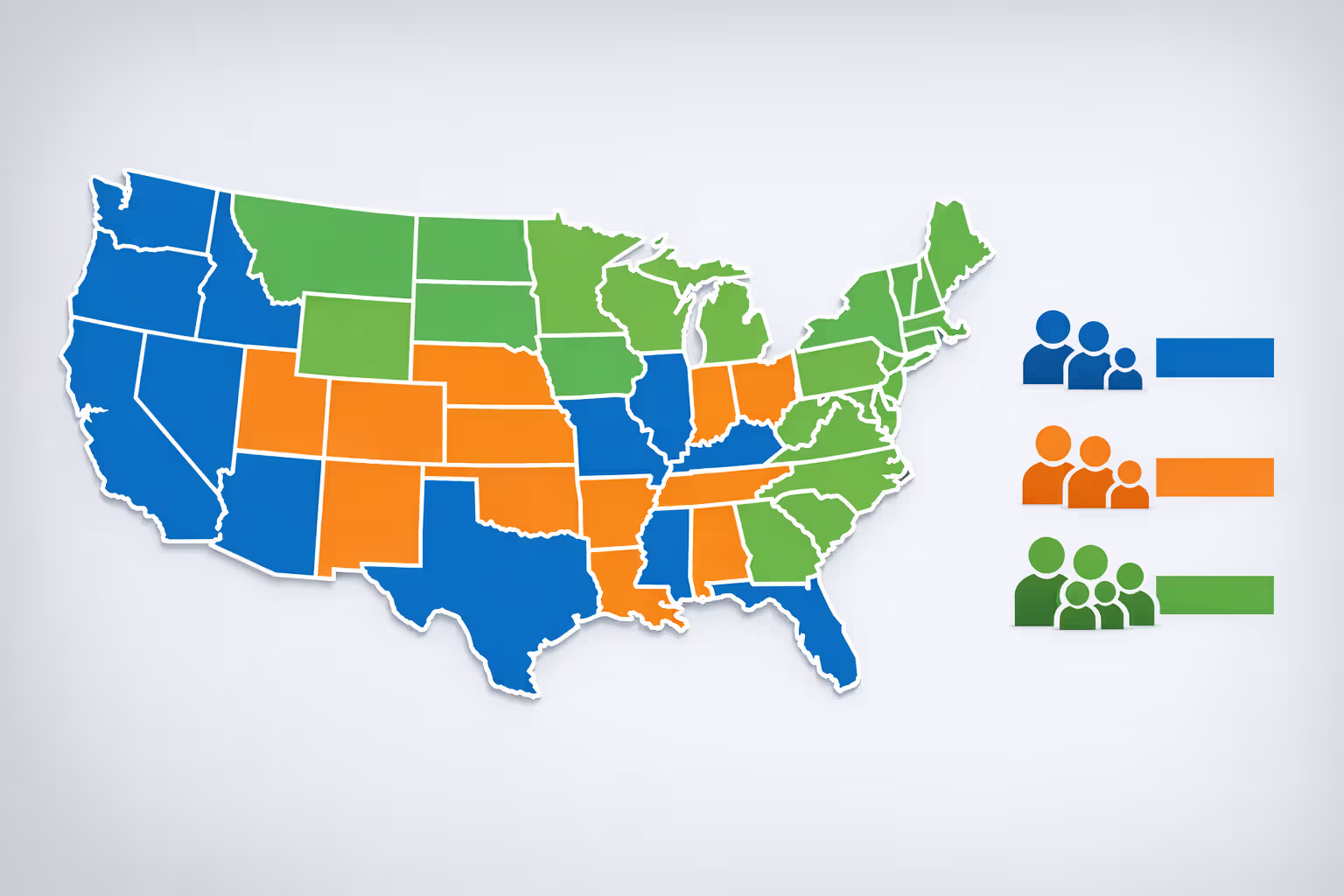
Here's where it gets tricky: "small business" means different things in different states. Most places draw the line at 50 full-time equivalent employees. But in states like New York and Colorado? They'll call you "small" even with 100 workers. Why does this matter? Because it determines which insurance rules apply to you and which plan options you can access.
Insurance companies want to see a few things before they'll work with you:
- At least one W-2 employee who isn't an owner (just yourself won't cut it in most cases)
- Workers putting in 30+ hours weekly
- Decent participation rates—usually 70% of eligible employees need to enroll, unless they've got coverage elsewhere
- You covering at least 50% of employee-only premiums (the baseline for most carriers)
Why bother with all this? Well, beyond attracting better candidates and keeping employees longer, you'll save serious money on taxes. Every dollar you spend on premiums is 100% deductible as a business expense. Plus, those contributions avoid payroll taxes entirely—that's an extra 7.65% savings right there.
Author: Derek Whitmore;
Source: blaverry.com
Your employees win too. Group plans cost less than marketplace coverage, especially for older workers or anyone with health issues. And when they chip in their share? That money comes out pre-tax through a cafeteria plan, shrinking their taxable income.
Small business health insurance isn't just doctor visits. Most plans bundle prescription drugs, free preventive care, and often dental and vision coverage. Unlike the individual market—where insurers in some states can jack up prices based on your medical history—group plans use community rating. Translation: everyone in the same age bracket pays similar rates, regardless of whether they're marathon runners or managing diabetes.
How Does Small Business Health Insurance Coverage Work
You'll want to start shopping 60-90 days before you need coverage to kick in. Most businesses work with a broker (they're free—the insurance company pays them) or buy through the SHOP marketplace.
First step? Fill out an employee census. This lists every eligible worker with their age, location, and whether they plan to enroll. Insurers crunch these numbers to quote you prices. Then you pick a plan—or offer several for employees to choose from—and decide how much you'll pay.
Most employers cover 50-100% of employee-only premiums. Family coverage? That varies wildly. Some companies pay 50% of dependent costs. Others pay zero. Your contribution level directly impacts both your budget and how employees view the benefit.
Once you've chosen, eligible workers complete enrollment forms during your initial enrollment period. They pick their tier (employee only, employee + spouse, employee + kids, or family) and provide dependent information if needed.
Federal law—specifically the ACA—requires companies with 50+ full-time equivalent employees to offer affordable, minimum-value coverage or face penalties. Under 50 employees? No federal requirement, though a handful of states have their own mandates.
The tax benefits are substantial. When you pay employee premiums:
- You deduct the full amount as a business expense
- The payments aren't subject to federal income tax withholding
- They skip Social Security, Medicare, and unemployment taxes
Got fewer than 25 employees earning average wages below $65,000 (2026 figures)? You might qualify for the Small Business Health Care Tax Credit—potentially up to 50% of what you pay toward premiums, if you buy through SHOP.
Coverage typically starts the first day of the month after enrollment wraps up. Some carriers let you start new hires mid-month. Workers can change elections during annual open enrollment or within 30 days of qualifying life events—marriage, birth, loss of other coverage.
Your ongoing to-do list includes collecting and remitting monthly premiums, processing enrollment changes, distributing required notices (summary plan descriptions, HIPAA privacy forms), and maintaining records for compliance.
Types of Small Business Health Insurance Plans
Small businesses can choose from several plan designs, each with different rules about which doctors you can see and how much you'll pay.
HMO Plans for Small Businesses

Author: Derek Whitmore;
Source: blaverry.com
Health Maintenance Organizations require members to pick a primary care doctor who coordinates everything. Need to see a specialist? You'll need a referral first. HMOs usually offer the lowest premiums—sometimes $100-150 less per month than PPOs—because they work with smaller networks and emphasize preventive care.
These work great when your team lives in the same geographic area. Go outside the network? You're paying 100% out of pocket, except in emergencies. The referral requirement annoys some people, but it keeps costs down by preventing unnecessary specialist visits.
HMOs make sense for budget-conscious employers who can accept less flexibility. Your employees need to be okay with the coordination requirements and willing to switch doctors if their current ones aren't in network.
PPO Plans for Small Businesses
Preferred Provider Organizations give you maximum freedom. See any doctor without referrals. While in-network providers cost less, you can go out of network and still get partial coverage. PPOs maintain much larger provider networks than HMOs and pay for some out-of-network care.
This flexibility comes at a price—PPO premiums typically run 15-30% higher than comparable HMOs. But they're perfect for companies with employees scattered across different states or regions, or teams that value provider choice above all else.
PPOs fit professional services firms, remote-first companies, and businesses competing for top talent with premium benefits. The higher premiums often translate to better employee satisfaction and easier recruiting.
EPO and POS Plans
Exclusive Provider Organizations split the difference between HMOs and PPOs. Like HMOs, they require network care (except emergencies) but skip the primary care physician gatekeeper and referral paperwork. EPOs usually cost less than PPOs but more than HMOs.
Point of Service plans also blend features. You pick a primary doctor like an HMO, but you can self-refer to out-of-network providers if you're willing to pay more out of pocket. POS plans typically price somewhere in the middle.
Both EPO and POS structures work for businesses wanting more flexibility than HMOs without paying full PPO prices. They shine in areas with strong local provider networks.
QSEHRA and ICHRA Options
Qualified Small Employer Health Reimbursement Arrangements let companies with under 50 employees reimburse workers tax-free for individual marketplace premiums and medical expenses. You set a monthly allowance, employees buy their own marketplace coverage.
QSEHRAs work great if you can't meet group plan participation requirements or want minimal administrative hassle. The 2026 annual contribution limits are $6,150 for single coverage and $12,450 for families.
Individual Coverage HRAs offer similar benefits without size restrictions or contribution caps. ICHRAs provide more design flexibility but require more complex administration.
These reimbursement models fit seasonal businesses, companies with mostly part-time staff, or employers who want to give workers complete plan control. They shift selection responsibility to employees—some love that autonomy, others find it overwhelming.
Small Business Health Insurance Coverage vs HMO vs PPO
Understanding how small business coverage differs as an HMO versus PPO helps you find the right balance between cost and flexibility for your workforce.
The main difference? Network restrictions and how you access specialists. Structuring your small business coverage as an HMO means you're prioritizing affordability and coordinated care. Going PPO means you value flexibility and choice, even if it costs more.
| Plan Type | Network Access | Referral Needed? | Typical Monthly Cost Per Employee (2026) | Works Best For |
| HMO | Restricted network; emergency-only out-of-network | Yes—primary doctor must authorize specialists | $575–$675 | Budget-focused companies; employees in same city; workers who prioritize low out-of-pocket costs |
| PPO | Wide network; partial coverage out-of-network | No—direct access to specialists | $725–$875 | Multi-state teams; employees who value doctor choice; competitive hiring markets |
| EPO | Restricted network; emergency-only out-of-network | No—self-refer to specialists | $625–$750 | Businesses wanting HMO pricing with less red tape; areas with solid local networks |
Cost differences extend beyond monthly premiums. HMOs typically feature lower deductibles ($1,000–$2,000) and out-of-pocket maximums ($5,000–$6,500), while PPOs often carry higher deductibles ($2,000–$3,500) and caps ($7,000–$8,500).
Network size matters more than you'd think. A PPO might list 50,000 providers statewide while an HMO shows 8,000. But if those 8,000 include all the major hospital systems and specialist types your employees need, the smaller network isn't really a limitation.
Geography plays a huge role. Team all within 30 miles? An HMO probably provides plenty of access. Employees spread across multiple states? You'll need a PPO or individual coverage HRA.
Your workforce demographics matter too. Younger, healthier teams often prefer HMOs because lower premiums outweigh network breadth they rarely use. Older employees or those managing chronic conditions often appreciate PPO flexibility despite higher costs.
The costliest mistake I see? Small business owners picking plans based solely on premium prices. That $100 monthly savings on an HMO looks great—until your star employee can't see their longtime specialist without switching doctors. Know your workforce needs before optimizing for cost
— Michael Torres
Some companies offer both HMO and PPO options, letting workers choose based on their priorities. This increases administrative work but maximizes satisfaction. Expect 60-70% of employees to pick the HMO when you fund both equally.
Small Business Health Insurance Coverage Examples
Real-world scenarios show how different companies approach their coverage decisions.
Tech Startup with 8 Employees
A software company in Austin has eight people total, founders included. The team skews young—average age 31—and mostly healthy. They prioritized cash compensation during scrappy startup days but now need benefits to recruit their next three developers.
They went with a high-deductible HMO paired with employer-funded HSAs. The HMO runs $625 monthly per employee, and the company adds $150 monthly to each person's HSA. This keeps total benefits spend under $8,000 monthly while providing catastrophic protection and building employee savings.
The high deductible ($2,500 single, $5,000 family) works because the workforce has minimal ongoing medical needs. The HSA contribution sweetens the deal and gives them something to talk about in interviews. Annual benefits cost? About $93,000 for eight people.
Retail Business with 25 Employees
A family-owned furniture store in suburban Chicago employs 25 people across three locations. The staff ranges from long-time employees in their 40s and 50s to younger part-timers. Only 18 workers qualify for benefits based on hours.
They chose a PPO with moderate cost-sharing ($1,500 deductible, $30 specialist copays). The employer pays 75% of employee-only premiums ($550 monthly) and 25% toward family coverage. Staff appreciate the PPO flexibility since they've built relationships with various providers across the metro area.
Eight employees took single coverage, six added spouses, and four enrolled families. The employer's monthly cost hits around $9,800, with employees paying the rest through paycheck deductions. Yearly employer spend? Roughly $117,600.
Professional Services Firm with 15 Employees
A Denver marketing agency with 15 employees wanted competitive benefits to lure senior talent from bigger agencies. Their team includes several people with families and ongoing medical needs.
They created a two-option setup: offering both an HMO choice ($600/month) and a PPO alternative ($775/month), with the employer covering 100% of employee-only premiums for either plan. Workers adding families pay full dependent premiums through pre-tax payroll deductions.
Nine employees picked the PPO, six went with the HMO. The employer's monthly spend on employee-only coverage runs $10,425, while employees contribute about $8,500 monthly for family add-ons. This keeps employer costs predictable at around $125,000 annually while providing meaningful choice.
How to Choose the Right Coverage for Your Small Business
Picking the right small business health insurance means juggling competing priorities that often pull in opposite directions.
Start with budget reality. Figure out what percentage of revenue you can consistently dedicate to benefits. Most small companies allocate 8-12% of total payroll to health insurance. If your combined monthly payroll is $50,000, expect health insurance to cost $4,000-$6,000 monthly depending on workforce ages and plan selections.
Survey your employees before you start shopping. Ask about their current doctors, whether they have ongoing specialist relationships, and how they prioritize cost versus flexibility. A simple anonymous survey prevents expensive mismatches between what you offer and what your team actually values.

Author: Derek Whitmore;
Source: blaverry.com
Review provider networks carefully. Get network lists from carriers and verify that major hospital systems and key specialist types participate. A plan with attractive premiums but inadequate network access creates frustration and might increase turnover.
Consider administrative burden honestly. Without dedicated HR staff, simpler plan designs and strong broker support beat marginal cost savings. Complex arrangements with multiple options require ongoing management.
Decide between broker partnerships or SHOP marketplace. Brokers provide personalized guidance at no cost to you while quoting multiple carriers simultaneously. SHOP offers a streamlined online experience and access to the Small Business Health Care Tax Credit, though fewer plan options in many markets.
Plan flexibility affects long-term satisfaction. Rigid HMO networks work fine until an employee's specialist leaves the network or someone relocates. PPO flexibility provides cushion but costs more. Match flexibility to your workforce stability and geographic concentration.
Think beyond medical coverage. Dental and vision insurance cost relatively little—often $30-60 monthly per employee—but significantly improve your benefits package perception. Voluntary add-ons like life insurance, disability coverage, and critical illness policies let employees customize coverage at group rates.

Author: Derek Whitmore;
Source: blaverry.com
Reevaluate annually. Your business grows, your workforce ages, and insurance markets shift. What worked with 10 employees might not serve you well at 25. Schedule a benefits review each summer, well before your renewal deadline.
Common Questions About Small Business Health Insurance
Health benefits will likely become one of your biggest line items—and one of your most valued employee perks. The difference between getting it right and getting it wrong? Understanding what's actually available, being honest about budget constraints, and matching coverage to real employee needs instead of theoretical ideals.
Companies that succeed with health benefits treat them as strategic investments, not unavoidable expenses. They survey workers before selecting plans, communicate transparently about coverage details and costs, and reevaluate their approach annually as the business evolves.
First question: can you reliably commit to offering coverage? Inconsistent benefits hurt morale more than never offering them. If you can't afford comprehensive coverage today, consider starting with a high-deductible plan paired with HSA contributions, or explore QSEHRA reimbursements as a bridge solution.
Work with an experienced broker who specializes in small business coverage. Their expertise costs you nothing and prevents costly mistakes. They'll handle enrollment paperwork, compliance requirements, and employee questions that would otherwise eat your time.
Remember: the "best" plan varies for every business. A tech startup with young workers has different needs than a manufacturing shop with an established workforce. Your coverage should reflect your specific situation, not generic advice.
Yes, small business health insurance feels complex. But breaking decisions into manageable steps makes the process navigable. Set your budget, understand your options, involve your team in the decision, and commit to reviewing your approach regularly. These fundamentals will serve you well no matter how insurance markets change.