

Family sitting at kitchen table reviewing health insurance documents and medical bills with calculator
Is Health Insurance Worth It for You

Content
Most families shell out somewhere between $1,200 and $2,000 monthly for health coverage in 2026. That's a car payment. Sometimes two car payments. So yeah, wondering if you're getting your money's worth? Totally fair question.
Here's the thing—there's no universal answer that works for everyone. Your neighbor's perfect plan might be a terrible fit for you. What makes sense depends on how often you see doctors, what medications you take, and honestly, how much financial risk keeps you up at night.
What Health Insurance Actually Covers
Think of health insurance as a deal you strike with a company. You send them money every month (that's your premium), and when you need medical care, they pick up most of the tab. The real benefit? You won't end up declaring bankruptcy because you broke your leg skiing.
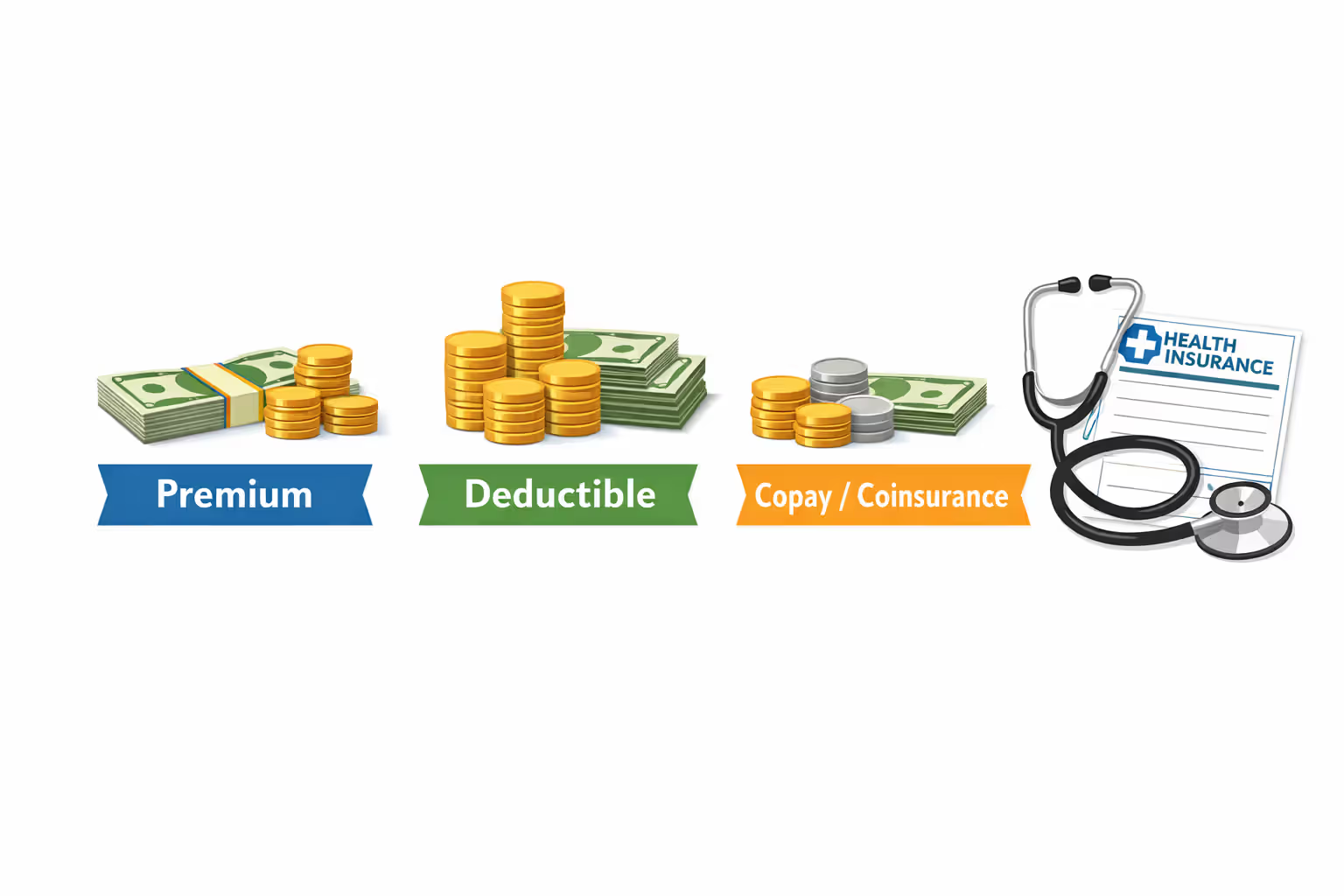
Now, the money part gets a bit complicated. You've got your monthly premium—pay it whether you visit a doctor or not. Then there's your deductible, which is basically the amount you cover yourself before insurance kicks in. Let's say your deductible is $2,500. You'll pay the first $2,500 of medical bills yourself. After that, you'll usually split costs with your insurer through copays (flat fees like $30 per visit) or coinsurance (you pay a percentage, like 20%).
Every plan also includes an out-of-pocket maximum. Hit that ceiling, and you're done paying for the year—insurance covers everything else at 100%. For 2026, these maximums typically range from $8,000 to $9,500 for individuals.
What's actually covered? Plans typically handle your annual checkup, flu shots, and cancer screenings without charging you a dime. They also cover hospital stays, surgeries, prescriptions, therapy sessions, and ER visits. But—and this matters—each plan covers things differently. One might require prior approval for an MRI. Another might not cover your preferred medication brand. The details matter more than you'd think.
Author: Lauren Prescott;
Source: blaverry.com
When Health Insurance Makes Financial Sense
Got diabetes? Heart disease? Rheumatoid arthritis? You're almost certainly coming out ahead with insurance. Take insulin as an example—buying it yourself can run $400 to $600 monthly. With insurance, you're usually looking at $10 to $50 copays. Do that math over twelve months and insurance basically pays for itself by March.
Parents, listen up. Kids need constant medical attention. Well-child visits, vaccines, random fevers at 2 AM, that weird rash that turned out to be nothing. Just having a baby costs anywhere from $15,000 to $30,000 without coverage. Even if you only use insurance for delivery, you've likely saved thousands.
Want to know if coverage makes financial sense for you specifically? Try this: Add up what you'd pay in premiums all year, plus your deductible and estimated copays. Now compare that to what you'd pay for the same care without insurance. If the uninsured total is significantly higher, insurance is worth it. This calculation gets more obvious as you age—once you hit 50, medical expenses tend to climb fast.
The question isn't whether you'll need healthcare, but when. Health insurance transforms unpredictable, potentially devastating costs into manageable monthly expenses. For most Americans, a single hospitalization would cost more than a decade of premiums
— Dr. Sarah Mitchell
Even healthy 25-year-olds aren't immune to disaster. Motorcycle crash. Appendicitis. Torn ACL playing pickup basketball. Any of these can generate $50,000+ in bills. Sure, the odds are low. But if it happens, you're financially ruined for years.
Comparing Health Insurance Plan Types
The plan structure you choose dramatically affects whether you're getting good value. HMOs and PPOs represent the two most common options, and they involve very different tradeoffs.
HMO Plans and Their Trade-offs
Health Maintenance Organizations (HMOs) save you money but limit your choices. You'll pick one primary doctor who becomes your healthcare quarterback—every specialist visit needs their referral first. Wander outside your approved network (except emergencies), and you're paying full price.
HMOs shine for people who like coordinated care, rarely travel far from home, and don't mind the referral dance. You might save $200 to $400 monthly compared to PPOs. But if you're particular about which doctors you see, or you travel frequently, those restrictions get old fast.
PPO Plans and Their Trade-offs
Preferred Provider Organizations (PPOs) give you freedom—at a price. See any doctor you want without referrals. Need a specialist? Call them directly. Traveling for work and need care? You're covered, though you'll pay more for out-of-network providers.
That flexibility costs real money. PPO premiums typically run 30% to 50% higher than comparable HMOs. You're essentially paying extra for convenience and choice. Whether that's worth it depends on how much you value flexibility versus how much you want to minimize monthly costs.
Which Plan Type Offers Better Value
| Feature | HMO | PPO |
| Monthly premium range | $400-700 (single person) | $550-1,000 (single person) |
| Referral requirements | Yes, for all specialists | No referrals needed |
| Out-of-network coverage | Emergencies only | Partial coverage (higher costs) |
| Best for whom | Budget-focused, local care seekers | Travelers, those wanting provider choice |
| Typical deductible | $1,000-3,000 | $1,500-5,000 |
| Flexibility level | Limited choices | Maximum flexibility |
Here's how to decide: If you rarely need specialists and live somewhere with lots of HMO providers, the lower premiums usually win. But if you're seeing specialists regularly or splitting time between cities, PPO flexibility can actually save money by keeping more providers in-network.
Real Costs of Going Without Coverage
Skipping insurance creates financial risks that extend way beyond just medical bills. The federal penalty for going uninsured dropped to zero in 2019, but California, Massachusetts, New Jersey, Rhode Island, and Vermont still charge their own penalties—ranging from $750 to $3,000 annually as of 2026.
Medical bills without coverage can destroy your finances. Here's what you'd actually pay:
| Medical Service | Average Cost Without Insurance | Typical Cost With Insurance |
| Emergency room visit | $2,500-5,000 | $150-500 (copay only) |
| Appendectomy | $33,000-45,000 | $1,500-4,000 (after meeting deductible) |
| Childbirth (uncomplicated) | $15,000-30,000 | $500-3,000 (after meeting deductible) |
| Broken bone treatment | $7,000-15,000 | $500-2,000 (after meeting deductible) |
| Annual checkup | $200-500 | $0 (covered as preventive) |
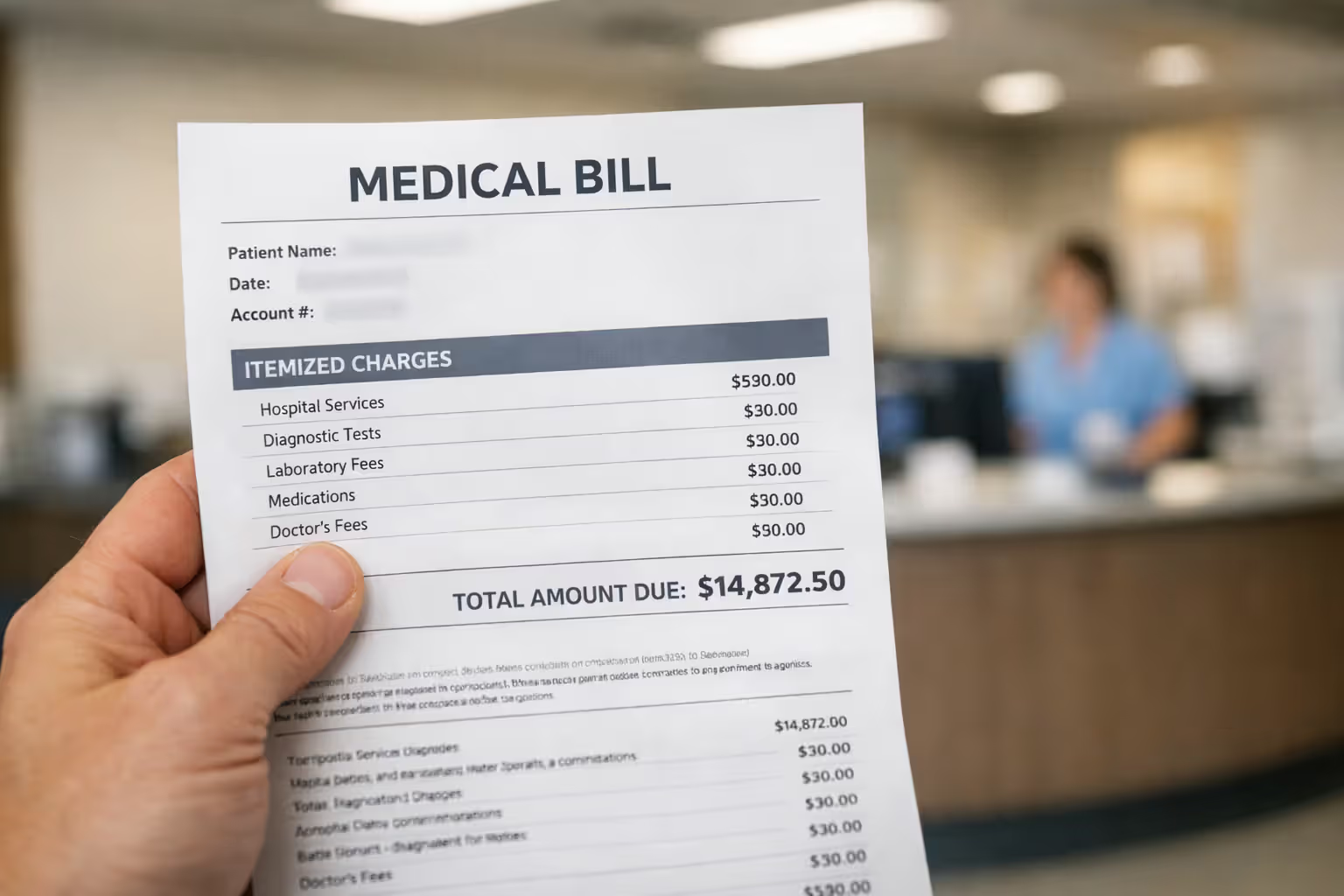
These numbers explain why medical debt causes more bankruptcies than anything else in America. One emergency, and you're facing bills that take decades to pay off. Sure, hospitals offer payment plans or charity programs, but uninsured patients get charged full retail—often 2-3 times what insurance companies pay.
The risk compounds every year. Each year uninsured represents another roll of the dice. Young adults sometimes bet on staying healthy, but statistics show about 1 in 4 twenty-year-olds will experience a disabling health event before retirement.
How to Calculate If Insurance Is Worth Your Money
Rather than guessing, work through a systematic evaluation. Start by gathering details on available plans—premiums, deductibles, copays, and out-of-pocket maximums.
Step 1: Write down your expected medical needs for the next twelve months. Include routine stuff (physical, dentist), ongoing prescriptions, and any procedures you're planning. Be honest—underestimating leads to bad decisions.
Step 2: Calculate your total costs with insurance. Add yearly premiums to expected out-of-pocket expenses based on plan details. Remember preventive care is free, and once you hit the out-of-pocket maximum, you stop paying.
Step 3: Estimate what you'd pay without insurance. Research typical prices in your area using tools like Healthcare Bluebook or FAIR Health Consumer. Tack on a buffer for surprises—people almost always need more healthcare than they expect.
Step 4: Compare the totals. If uninsured costs significantly exceed insured costs, coverage is clearly valuable. If the numbers are similar, ask yourself: Can I comfortably handle a $50,000 surprise bill? Most people can't.
Step 5: Don't forget the intangibles. Insurance buys peace of mind, easier access to care, and protection against worst-case scenarios. That's worth something even if it's hard to put a number on.

Author: Lauren Prescott;
Source: blaverry.com
New to this analysis? Start simple. If your expected medical costs exceed your deductible, insurance almost definitely makes sense. If they don't, you're buying catastrophic protection—valuable, but requires thinking hard about your emergency fund and comfort with risk.
Common Mistakes When Evaluating Health Insurance Value
People consistently underestimate how much healthcare they'll need. They assume perfect health, ignoring the reality that unexpected issues pop up regularly. Strep throat, UTIs, sprained ankles—these "minor" problems add up faster than you'd expect.
Another trap: obsessing over premiums while ignoring everything else. A plan charging $300 monthly with a $6,000 deductible can easily cost more annually than one with $500 premiums and a $2,000 deductible—if you actually use healthcare. Total yearly cost matters more than any single number.
Provider networks catch tons of people off-guard. That cheap HMO looks great until you realize your rheumatologist isn't in-network. Now you're either switching doctors or paying full freight. Same with medication coverage—plans that don't cover your prescriptions or require extensive prior authorizations can eliminate any savings.
Some folks overestimate their negotiating power. Yes, some doctors offer cash discounts, but these rarely match insurance-negotiated rates. A 20% discount on a $10,000 procedure still costs $8,000—way more than typical insurance cost-sharing.
People also overlook the protection value of out-of-pocket maximums. This feature caps your annual spending regardless of what happens. A plan with a $9,000 maximum means your worst-case scenario is $9,000 plus premiums for the year. Get cancer? Hit by a bus? Maximum you'll pay is that cap. This protection has enormous value that's easy to ignore when you're healthy.
Author: Lauren Prescott;
Source: blaverry.com
FAQ: Is Health Insurance Worth It
Figuring out whether health insurance justifies the cost requires honest assessment of your health needs, financial situation, and how much risk you can stomach. For most Americans, coverage provides essential financial protection worth the expense. The real question isn't whether insurance has value—it's which plan delivers the best value for your specific circumstances.
Run the numbers for different scenarios. Consider both routine care and potential emergencies. Think about whether you can absorb unexpected medical bills without derailing your financial goals. Insurance converts unpredictable, potentially devastating expenses into predictable monthly payments.
If premiums are stretching your budget thin, explore cost-reduction options: marketplace subsidies, employer contributions, HSA-eligible high-deductible plans, or more restrictive networks like HMOs. Going completely uninsured should be your absolute last resort—only if you truly cannot afford any coverage option and have no assets worth protecting.
Your health and financial security matter too much for guesswork. Invest time in running the calculations, understanding your options, and making an informed choice. The right coverage provides not just financial protection, but genuine peace of mind that you can get necessary care without facing financial ruin.