

Health insurance card, calculator, notebook and laptop on a desk representing therapy coverage research
Does Health Insurance Cover Therapy for Mental Health

Content
Most American health plans now include mental health coverage by law, but figuring out what that means for your wallet takes some detective work. Your friend might pay $20 per session while you're stuck with $150 bills for the same type of therapy. The difference usually comes down to plan type, whether your therapist is in-network, and how your deductible works.
Let's cut through the insurance jargon and figure out exactly what your coverage looks like, what you'll actually pay, and how to avoid those surprise bills that show up three months after your appointment.
How Health Insurance Coverage for Therapy Works
The Mental Health Parity and Addiction Equity Act changed everything back in 2008. Insurance companies can't slap extra restrictions on mental health treatment that they wouldn't put on regular medical care. So if your plan lets you see a cardiologist without jumping through hoops, they can't make therapy impossibly difficult to access.
The Affordable Care Act doubled down on this by adding mental health services to the list of ten benefits every marketplace plan has to include. Between these two laws, mental health coverage went from optional to mandatory for most plans.
How does health insurance cover therapy work when you actually book an appointment? Your insurance company negotiates rates with therapists who join their network. These providers agree to charge less than their standard fees in exchange for getting referred patients. When you visit one of these in-network therapists, you'll typically hand over a copay—maybe $25, maybe $55, depending on your plan—and insurance handles the rest.

Author: Ethan Bradford;
Source: blaverry.com
Going outside the network gets expensive fast. Your plan might refuse to pay anything at all, leaving you with the therapist's full rate of $150-300 per session. Or they might cover half after you meet a separate (usually higher) deductible, but you're still on the hook for the gap between what the therapist charges and what insurance considers "reasonable."
Deductibles add another layer. Let's say you have a $2,000 deductible. You'll pay the full negotiated rate—maybe $110 per session—for every appointment until you've spent $2,000 on covered healthcare that year. Once you cross that threshold, you drop down to just your copay or coinsurance. Some plans skip the deductible for mental health, letting you pay your lower copay from day one.
Does health insurance cover therapy explained in plain English: your insurance gets you discounted rates and pays most of the bill, but you'll always pay something. The trick is knowing that "something" before you're six sessions deep.
What Types of Therapy Health Insurance Typically Covers
Individual therapy—just you and a therapist, talking through depression, anxiety, trauma, or whatever you're dealing with—gets covered by virtually every plan. Licensed clinical social workers, psychologists, professional counselors, and psychiatrists all qualify as covered providers when they're treating diagnosed mental health conditions.
Group therapy sessions usually come with lower copays since you're splitting the therapist's time with other people. Most plans cover these without issue. Family therapy gets trickier. If your kid has ADHD or depression and family sessions are part of treating that diagnosis, insurance typically pays. Pure couples counseling to improve your relationship? That's usually on your dime unless one partner has a diagnosed condition the therapy addresses.
The specific therapeutic approach—whether your therapist uses Cognitive Behavioral Therapy, Dialectical Behavior Therapy, EMDR, or any other evidence-based method—doesn't usually matter to insurance companies. They care about two things: is the provider licensed, and are they treating a covered diagnosis?
Telehealth therapy exploded in 2020 and stayed popular. Insurance companies now treat video therapy sessions exactly like in-person visits. Same copay, same coverage. You can sit in your living room instead of a waiting room and insurance doesn't care. Some insurers actually prefer it and offer lower copays for virtual appointments.

Author: Ethan Bradford;
Source: blaverry.com
What is does health insurance cover therapy when you get into intensive treatment? Outpatient programs where you attend therapy several hours a day, partial hospitalization programs, and inpatient psychiatric stays all get covered—but expect to need prior approval. Applied Behavior Analysis for autism is mandated in most states now. Standard talk therapy rarely needs pre-approval.
What doesn't get covered? Life coaching. Personal growth counseling when you don't have a diagnosis. Relationship tune-ups for couples doing fine. Experimental treatments like wilderness therapy programs. Insurance pays for medical treatment of diagnosed conditions, not general self-improvement.
Does health insurance cover therapy examples you'll likely encounter: - Weekly individual sessions for major depression (covered) - Biweekly CBT for generalized anxiety (covered) - Monthly psychiatrist visits for medication management (covered) - Group therapy for substance abuse recovery (covered) - Family sessions when your teenager has an eating disorder (covered) - Video therapy for panic attacks (covered) - Couples counseling because you're fighting a lot but neither of you has a diagnosis (usually not covered)
Coverage Differences Between HMO and PPO Plans
Your plan type determines how much freedom you have choosing therapists and what you'll pay for that freedom. HMOs and PPOs handle mental health coverage completely differently.
Does health insurance cover therapy vs HMO arrangements? Absolutely, but expect more hoops. HMOs make you pick a primary care doctor who becomes your healthcare gatekeeper. Want therapy? Schedule an appointment with your PCP first, explain what's going on, and get a referral. Only then can you book with a therapist. This adds a week or two before you start actual treatment.
The payoff for that hassle: lower costs. HMO therapy copays often land between $15-30 per session. Many HMOs waive the deductible entirely for mental health services, so you pay that low copay from your very first appointment.
HMO networks are tight. You're limited to therapists who contract with your specific plan. Already seeing someone you trust? If they're not in your HMO's network, you're either switching therapists or paying $200+ per session entirely out of pocket.
Does health insurance cover therapy vs PPO plans offers more breathing room. Skip the referral—just find a therapist and make an appointment. PPO networks include more providers, giving you better odds of finding someone who specializes in your specific issue and has evening appointments available. You can even go out-of-network and still get partial reimbursement, though you'll pay more.
That flexibility costs you. PPO therapy copays typically run $35-65 per session. You'll probably need to satisfy your deductible before that copay kicks in, meaning you pay the full negotiated rate for your first dozen sessions or so. Out-of-network visits might require paying upfront and filing claims yourself, and you're stuck with whatever the therapist charges above the "allowed amount."
Here's how they stack up:
| Feature | HMO Plan | PPO Plan |
| Referral Requirement | Required from primary care doctor | Self-refer directly to therapist |
| Provider Network Flexibility | Restricted network; no out-of-network coverage | Broader network; partial out-of-network coverage |
| Typical Copay Range | $15-30 per session | $35-65 per session |
| Out-of-Network Coverage | Zero (full cost to you) | Partial (commonly 50-70% after separate deductible) |
| Best For Whom | Budget-conscious patients who don't mind gatekeeping | People prioritizing choice and willing to pay more |
EPOs (Exclusive Provider Organizations) work like HMOs minus the referral requirement. Point of Service plans let you choose between HMO-style and PPO-style access at each appointment. Don't assume anything based on plan names—verify your actual benefits.
How to Find Out If Your Plan Covers Therapy
Does health insurance cover therapy for beginners means learning to decode your own plan. Flip over your insurance card and call that member services number. You'll spend ten minutes on hold, but you'll get concrete answers about your actual coverage instead of guessing.
Have your insurance ID number ready and ask these specific questions (reworded to avoid the formulaic versions): - "What will I pay per therapy session—copay or coinsurance?" - "Does my deductible apply to outpatient mental health, or can I skip straight to copays?" - "Will I need approval before starting therapy, or can I just book an appointment?" - "How many therapy visits can I have before you start reviewing medical necessity?" - "Does telehealth cost the same as office visits?" - "Can you confirm whether
participates in my plan?"
Author: Ethan Bradford;
Source: blaverry.com
Write down the representative's name and any reference number they give you. If a bill shows up later that contradicts what they said, you'll have documentation for your appeal.
Your plan documents spell everything out in excruciating detail—you just have to find them. Log into your insurance portal and download your Summary of Benefits and Coverage (the short version) and Evidence of Coverage (the complete terms). Search for "behavioral health" or "mental health" sections. The SBC includes real-world examples showing exactly what you'd pay for "managing type 2 diabetes" or "routine depression treatment."
Every insurance company runs an online provider directory where you can search for therapists near you. Filter by specialty (anxiety, trauma, eating disorders), location, and whether they're taking new patients. But here's the catch—these directories are notoriously outdated. Therapists show up months after they've stopped taking that insurance, or they're missing entirely despite being in-network.
Always call the therapist's office directly and ask: "Do you accept
, and are you taking new patients with that insurance?" Get confirmation before you book. Otherwise you might show up for your first appointment only to discover they haven't accepted your plan in six months.Some plans want pre-approval before you start therapy. This is rare for standard weekly talk therapy but common for intensive outpatient programs or testing. Your therapist's office usually submits the authorization request, but ask about it during your initial phone call. Starting therapy without required pre-approval means the claim gets denied and you're stuck with the full bill.
Don't assume your coworker's experience matches yours. Even if you work at the same company, different plan tiers have completely different mental health benefits. Their $25 copay doesn't predict your costs if you picked the high-deductible option to save on premiums.
Common Limitations and Exclusions in Therapy Coverage
Does health insurance cover therapy meaning extends beyond simple yes-or-no answers—you need to understand the boundaries of what "covered" actually means.
Session limits aren't as common as they used to be (thanks, parity laws), but medical necessity reviews serve the same function. After you've had 20-30 sessions, your insurance might ask your therapist to submit progress notes justifying why you still need treatment. If the reviewer decides you've improved enough, they can deny coverage for additional sessions even though you and your therapist disagree.
Certain diagnoses attract more scrutiny. Borderline personality disorder often triggers extra utilization reviews. Learning disabilities, V-code diagnoses (relationship problems, phase-of-life issues, and other non-disorder situations), and court-ordered therapy typically don't qualify for insurance payment. Adjustment disorders get covered, but some plans limit how long they'll pay for treatment of short-term stress reactions.
Out-of-network restrictions can devastate your budget. Your plan might have a separate out-of-network deductible—say $4,500 instead of $1,500—that you must satisfy before they pay anything. After that, they might reimburse only half of the "allowed amount," which bears no relationship to what therapists actually charge. Your therapist bills $225 per session, insurance decides the allowed amount is $120, they reimburse 50% of that ($60), and you owe $165 per session. Ouch.
Alternative and experimental treatments rarely qualify. Neurofeedback, wilderness therapy programs, equine therapy, and art therapy (unless it's part of a covered program led by a licensed mental health professional) usually get denied. Psychological testing needs pre-approval and some plans only cover it once every two or three years.
Watch out for carved-out mental health benefits. Some insurers contract with separate companies like Optum Behavioral Health, Beacon, or Magellan to manage mental health claims. You'll have a different phone number to call, a separate provider network to search, and claims go to a different address. Your insurance card should list a behavioral health contact if this applies to you.
Out-of-Pocket Costs for Therapy with Insurance
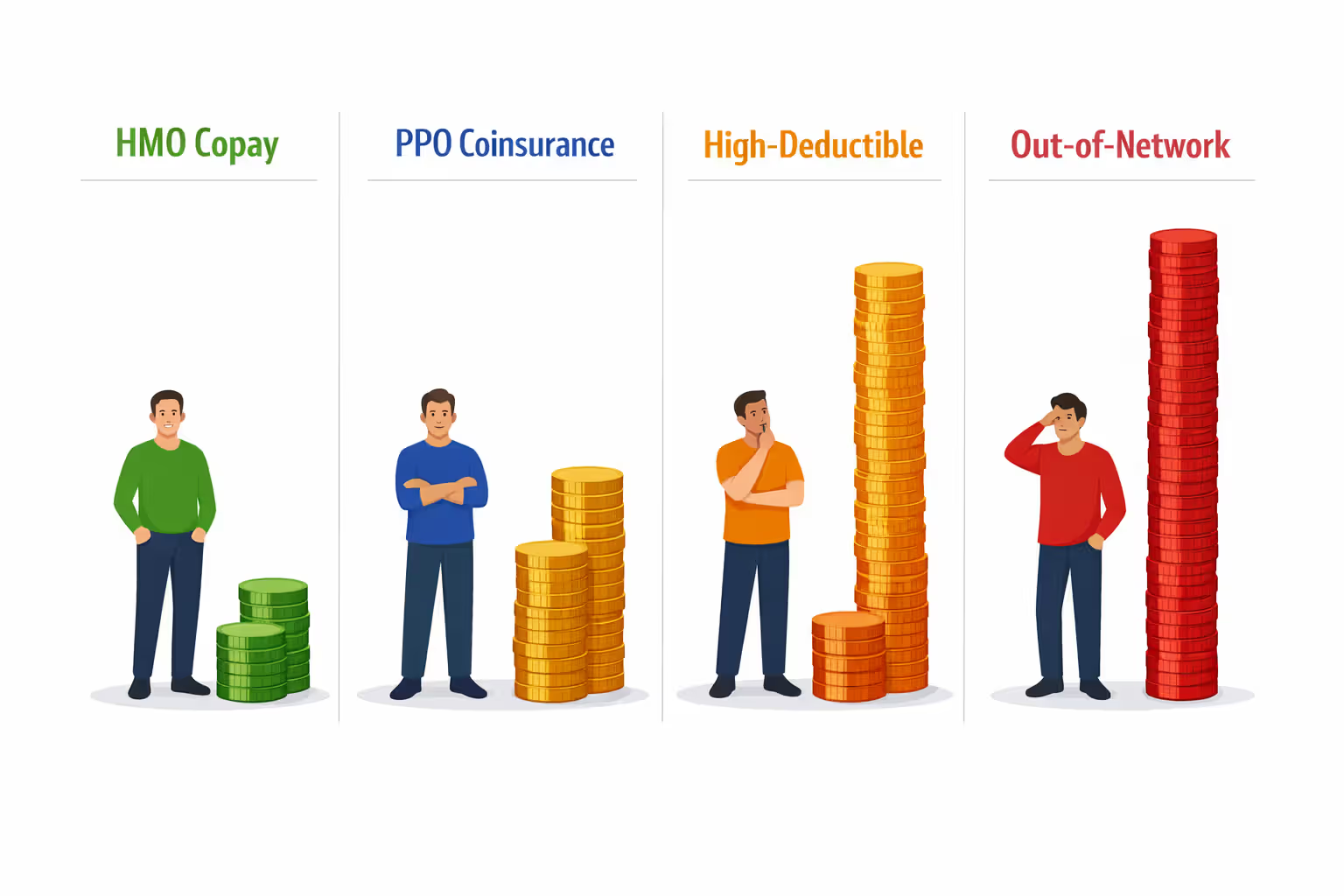
Let's talk real numbers using real scenarios because "it depends" doesn't help you budget.
Copay-based HMO: Maria's plan charges a flat $30 per therapy session with no deductible for behavioral health. She goes weekly. Simple math: $30 × 52 weeks = $1,560 per year. That's it. Her cost never changes.
Author: Ethan Bradford;
Source: blaverry.com
Coinsurance PPO with deductible: James has a $1,200 deductible, then pays 20% coinsurance. His therapist's contracted rate is $135 per session. For his first nine sessions, James pays the full $135 each time (totaling $1,215, clearing his deductible). Session ten and beyond, he pays 20% of $135 = $27 per session. If he attends 45 sessions total: $1,200 (deductible) + $972 (20% of 36 sessions) = $2,172 for the year.
High-deductible catastrophic plan: Elena chose a plan with rock-bottom premiums but a $5,000 deductible and 40% coinsurance after that. Her therapist charges $140 (negotiated rate). Elena pays the full $140 per session until she's spent $5,000 total on healthcare. If therapy is her only medical expense, that's roughly 36 sessions at full price before coinsurance kicks in. After that, she pays 40% of $140 = $56 per session.
Out-of-network PPO disaster: Chris sees an out-of-network therapist who charges $275 per session. His PPO has a $3,000 out-of-network deductible and covers 60% of the allowed amount after that. The allowed amount is $140. Chris pays the full $275 for his first 11 sessions (hitting the $3,000 deductible). After that, insurance pays 60% of $140 = $84. Chris still owes the remaining $56 allowed amount plus the $135 difference between allowed and actual charge = $191 per session. He could have seen an in-network therapist for a $45 copay instead.
Does health insurance cover therapy examples showing typical 2026 costs: - HMO in-network: $20-40 per session, deductible often waived - PPO in-network: $40-70 copay, or 20-30% coinsurance after you've paid $750-$2,500 toward your deductible - PPO out-of-network: 50-70% coverage after a $3,000-$6,000 deductible, plus you pay the balance-billed amount - High-deductible plan: Full negotiated rate ($100-$180) until you've spent $2,000-$6,000, then 20-50% coinsurance
Every plan has an out-of-pocket maximum—the most you can spend on covered services in a year. Once you hit that limit (commonly $6,000-$9,000 for individuals), your insurance covers 100% of everything else through December 31st. If you're in therapy twice weekly or managing multiple health conditions, reaching this maximum gives you unlimited therapy coverage for the rest of the year.
Many therapists offer sliding-scale fees if your insurance coverage doesn't stretch far enough. Some will arrange payment plans. If cost is genuinely stopping you from getting care, ask. Most therapists prioritize helping people over maximizing income.
I always tell my clients to call their insurance before our first session and write down exactly what the representative says, including their name and reference number. I've seen too many people surprised by unexpected bills because they assumed their coverage was better than it actually was. Five minutes on the phone can prevent months of billing headaches and help you budget appropriately for your mental health care
— Dr. Michael Chen
Frequently Asked Questions About Health Insurance and Therapy Coverage
Therapy coverage exists in most insurance plans now, but actually using those benefits requires understanding your specific plan's rules and costs. The difference between affordable care and financial stress often comes down to choosing in-network providers and knowing your plan's requirements before you start treatment.
Spend time upfront investigating your coverage. Call member services with specific questions. Download and read your benefits documents, focusing on behavioral health sections. Ask potential therapists about their experience with your insurance company and what you should expect to pay per session. Knowing whether you face a deductible or just a copay helps you budget for consistent care rather than stopping treatment when surprise bills arrive.
Insurance companies cover medically necessary treatment for diagnosed mental health conditions. If you're dealing with depression, anxiety, PTSD, bipolar disorder, or other mental health challenges, evidence-based therapy for those conditions should be covered. The system has frustrating limitations and bureaucratic nonsense, but millions of Americans successfully use insurance to make therapy financially accessible.
When your insurance coverage proves inadequate, alternatives exist. Many therapists offer sliding-scale fees based on income. Community mental health centers provide low-cost services. University training clinics let graduate students deliver therapy under licensed supervision for reduced rates. Employee Assistance Programs through your employer often include 3-8 free therapy sessions before insurance even gets involved. Mental health care matters enough to pursue even when insurance creates obstacles.
Mental health parity laws that mandate equal treatment of mental and physical health represent significant progress after decades of advocacy. Understanding how to leverage those protections puts you in the driver's seat of your mental healthcare decisions rather than leaving you at the mercy of insurance company whims.